
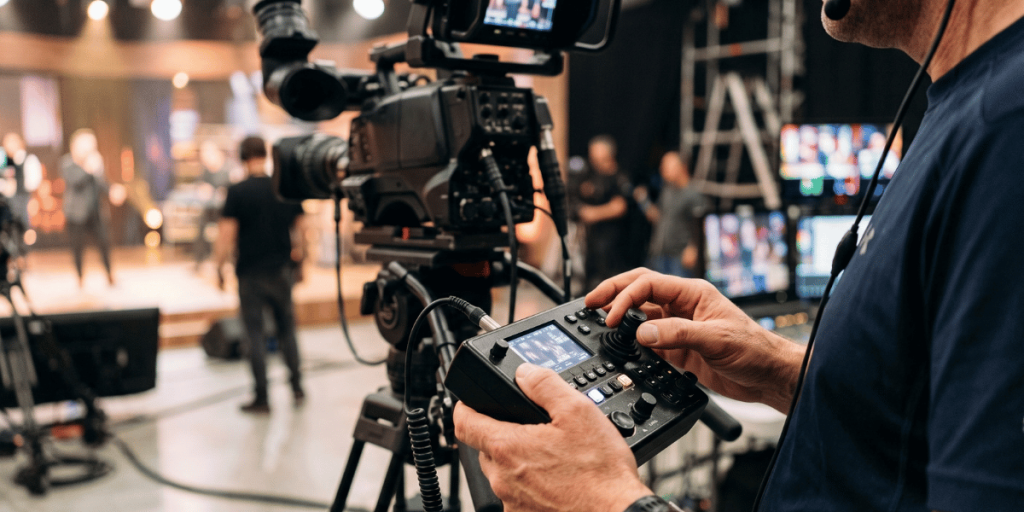
For broadcasters in Woodbridge, VA and throughout Northern Virginia, keeping a station on the air involves much more than producing great programming. Technical changes, transmitter upgrades, antenna modifications, coverage issues, and FCC requirements can create expensive compliance problems when they are handled without the right engineering expertise.
One overlooked RF issue can lead to interference, delayed applications, corrective work, or other unexpected costs. Smith & Fisher provides radio frequency consulting, broadcast engineering, RF studies, safety services, and telecommunications expertise for broadcasters and communications organizations in Woodbridge and beyond. In this guide, we will examine some of the most common FCC RF compliance mistakes and explain how professional engineering support can help stations avoid them.
Table of Contents
- Treating RF Compliance as a Paperwork Issue
- Failing to Evaluate Changes Before Making Them
- Overlooking RF Exposure and Multi-Transmitter Sites
- Choosing the Wrong Engineering Approach
- Frequently Asked Questions
Treating RF Compliance as a Paperwork Issue
FCC compliance is not simply about completing forms correctly. Behind many FCC filings are technical calculations, engineering assumptions, facility parameters, coverage studies, and interference considerations that need to be accurate before an application is submitted.
The FCC states that compliance with its RF exposure limits is an ongoing requirement for entities holding FCC authorizations, including radio station licenses. The Commission also explains that consideration of RF levels and appropriate access restrictions around transmitting antennas can be necessary even when a particular service is not subject to routine evaluation.
For a broadcaster in Woodbridge, this means a filing should not be treated as an isolated administrative task. A proposed facility modification, transmitter change, antenna adjustment, or other technical alteration can have consequences that are not obvious from the paperwork alone.
Smith & Fisher describes its work as including engineering studies, analysis, design, implementation, optimization, and enhancement of wireless telecommunications systems. Its broadcast consulting services cover full-power television, full-power FM, LPFM, LPTV, and Class A stations.
Getting the engineering right before filing can help a station avoid the much more expensive process of correcting an application or redesigning a project after problems are discovered.
Failing to Evaluate Changes Before Making Them
One of the most expensive mistakes a broadcaster can make is assuming that a seemingly minor technical change will have no regulatory consequences.
Changing transmitter power, antenna configuration, transmission equipment, location, or other facility parameters can affect coverage and interference relationships. For example, a station seeking to improve reception in a particular portion of its service area may need to evaluate whether a proposed modification could affect neighboring facilities.
Northern Virginia’s crowded communications environment makes careful engineering especially important. Broadcasters may operate near numerous other stations and wireless systems, making interference analysis and coverage evaluation essential parts of responsible facility planning.
Smith & Fisher specifically provides allocation studies, auction analysis, station improvement services, channel studies, displacement support, and other engineering services for broadcast stations. The company also works with broadcasters on FCC licensing and technical matters.
Before purchasing equipment or committing to construction, station owners should have an engineer review the proposed changes. Identifying a technical obstacle early can be far less expensive than discovering it after equipment has been purchased or construction has begun.
A professional review can also help determine whether a planned modification requires additional analysis or an FCC filing and what technical information should support that filing.
Overlooking RF Exposure and Multi-Transmitter Sites
RF exposure is another area where broadcasters can underestimate their responsibilities. The FCC has established limits for human exposure to radiofrequency radiation and requires applicable facilities to demonstrate compliance through appropriate evaluations.
A common misconception is that RF compliance only matters when someone is working directly beside a transmitting antenna. In reality, the relevant question is whether people can access areas where RF levels may exceed applicable limits.
This becomes particularly important at sites with multiple transmitting antennas. The FCC has explained that exposure levels may need to be considered collectively at sites where multiple RF sources operate. Access restrictions and other measures may be necessary to maintain compliance.
For broadcasters, this can affect tower sites, rooftop installations, transmitter locations, maintenance areas, and other accessible spaces. Employees, contractors, tower crews, building occupants, and members of the public may have different levels of access and therefore different exposure considerations.
Smith & Fisher has extensive experience with RF safety-related services. The company notes that its president, Kevin T. Fisher, has conducted power-density studies to assist stations and building owners with FCC and OSHA RF human-exposure requirements.
A site-specific RF assessment can provide measurable information instead of relying on assumptions. Depending on the circumstances, professional recommendations may include RF measurements, calculations, signage, access controls, or safety training.
Choosing the Wrong Engineering Approach
Another costly mistake is selecting an engineering solution based solely on the immediate problem rather than looking at the entire facility.
For example, a broadcaster experiencing coverage problems may assume that increasing power is the obvious solution. But coverage depends on more than transmitter power. Antenna characteristics, height, terrain, frequency, propagation, interference, and other technical factors can all influence real-world performance.
Likewise, an organization planning an LPFM or LPTV facility may focus on obtaining equipment before determining whether the proposed frequency and site are technically viable. That can create unnecessary expenses if engineering limitations are discovered later.
Good RF consulting starts with analysis before implementation. Smith & Fisher explains that RF consultants may assist with location selection, systems engineering, design, technical studies, optimization, and troubleshooting.
This approach can be especially valuable when a station is considering relocation, displacement, channel changes, facility improvements, or other significant modifications. Smith & Fisher recently highlighted the importance of engineering analysis for broadcasters navigating changes involving LPTV relocation, contour requirements, emission masks, and FCC filings.
The goal is not simply to satisfy an FCC requirement. Proper engineering should help the station make sound technical decisions that protect coverage, reduce interference risks, support compliance, and make better use of its investment.
For broadcasters seeking radio frequency consultants in Woodbridge, VA, working with a local consultancy that understands both RF engineering and broadcast regulations can provide an important advantage.
Frequently Asked Questions About Radio Frequency Consultants in Woodbridge, VA
What does an RF consultant do for a broadcast station?
An RF consultant provides specialized engineering support involving radiofrequency systems. Services can include frequency and allocation studies, coverage analysis, interference studies, RF exposure evaluations, facility design, optimization, troubleshooting, and technical support for FCC applications. The specific services depend on the station, project, equipment, and regulatory requirements.
Why is RF exposure compliance important for broadcasters?
FCC RF exposure limits apply to relevant transmitting facilities, and stations must consider whether people can access areas where RF levels could exceed applicable limits. Multiple transmitters at the same site can also contribute to overall exposure. Professional evaluation can help identify potential problem areas and appropriate safety measures.
When should a broadcaster hire an RF consultant?
Ideally, engineering support should be obtained before making significant technical or facility changes. A consultant can evaluate a proposed transmitter, antenna, site, frequency, relocation, or coverage modification before the station commits substantial money to equipment or construction.
Can RF consultants help with FCC filings?
Yes. Depending on the project, RF consultants can prepare or support the technical engineering portions of FCC applications and provide studies needed to support proposed facility changes. Smith & Fisher provides broadcast engineering and consulting services for multiple types of broadcast facilities.
Are RF measurements always required?
Not necessarily. FCC requirements depend on the facility, service, operating characteristics, and applicable rules. Some facilities may qualify for categorical exclusions from routine evaluation, but that does not necessarily mean RF exposure considerations can be ignored. A qualified engineer can determine what type of evaluation is appropriate for a particular site.
Conclusion
FCC RF compliance is not an area where broadcasters should rely on assumptions or treat engineering as an afterthought. Errors involving facility modifications, coverage, interference, RF exposure, or technical filings can create unnecessary costs and delays.
Working with experienced radio frequency consultants in Woodbridge, VA can give broadcasters access to the technical analysis needed to make informed decisions before problems become expensive. Smith & Fisher provides broadcast and telecommunications consulting, RF studies, RF safety services, engineering analysis, and technical support for stations and communications organizations.
Planning a station modification, transmitter upgrade, coverage improvement, relocation, or RF safety evaluation? Do not wait until an FCC issue becomes an expensive problem.
Contact Smith & Fisher to discuss your project and determine what engineering analysis or RF consulting support may be appropriate for your facility. With experienced technical guidance, broadcasters can approach FCC requirements with greater confidence while protecting their investment and keeping their operations on solid technical ground.


